

Published:20 Jan 2026
On January 19, the 16th Guangzhou Municipal People’s Congress Holds Its Sixth Session on January 19. Delegates from all sectors across the city gathered to collectively discuss and plan Guangzhou’s development strategy. As a representative of Guangzhou’s private technology entrepreneurs, Member of the Guangzhou Municipal People's Congress, and President of Beiming Software Co., Ltd. (Beiming Software), Ying Huajiang offered recommendations on two critical areas: high-quality development of Guangzhou’s artificial intelligence industry and the integration of urban planning with industrial development. His proposals received widespread attention and coverage from the public and media outlets, including CCTV.com.
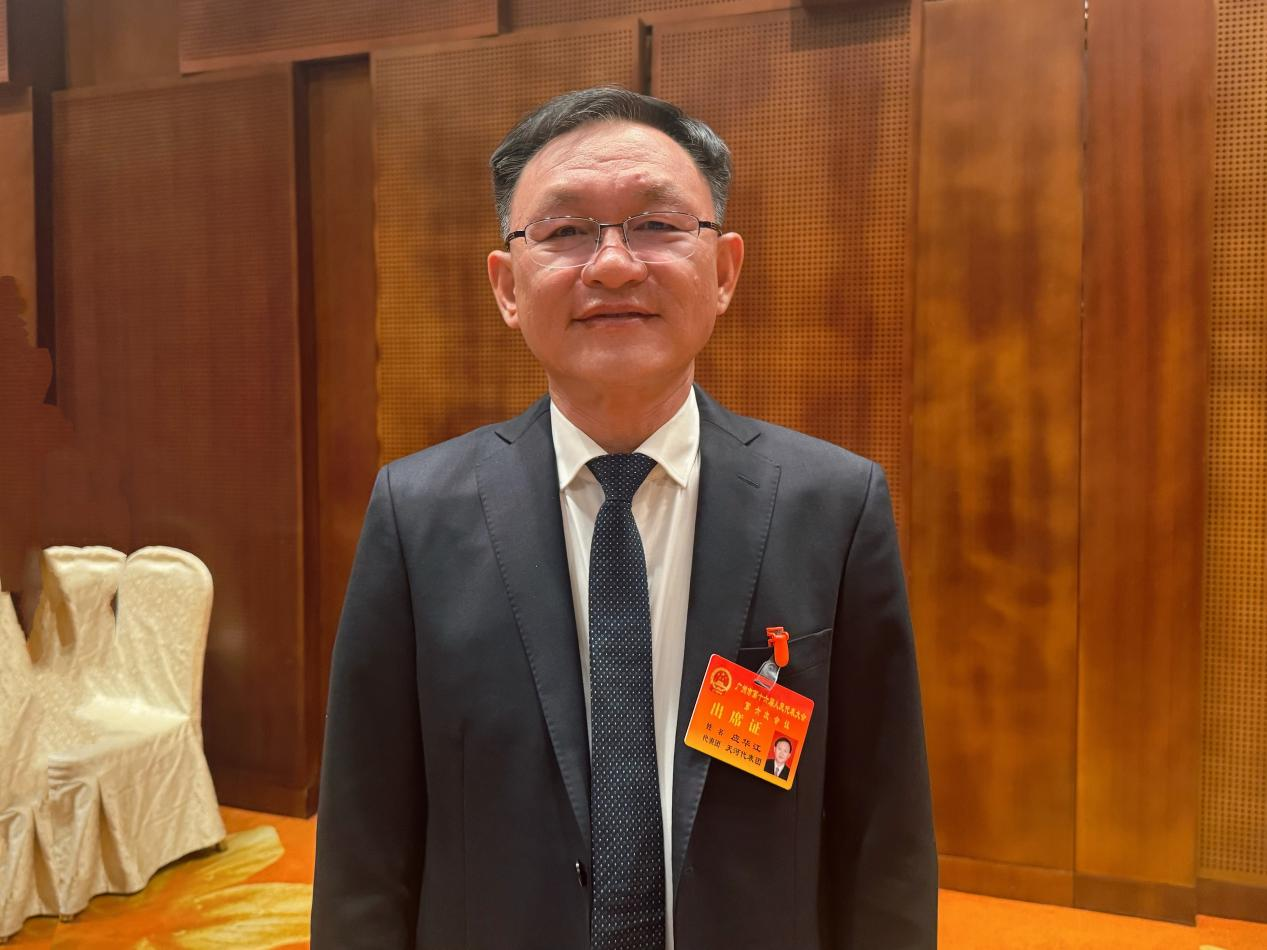
Ying Huajiang Participates in Guangzhou’s Two Sessions
Regarding the high-quality development of the AI industry, Ying Huajiang put forward recommendations to leverage Guangzhou’s solid foundation in manufacturing and service sectors, along with its rich application scenarios, to advance the industry along six dimensions: Deepen Industry–Academia–Research Collaboration – Connect the key links from basic research to industrial transformation. Develop Benchmark Application Scenarios – Create replicable industry solutions in areas such as smart manufacturing, smart healthcare, and smart cities. Cultivate Local Leading Enterprises – Strengthen the industry’s guiding role and build a complete AI ecosystem. Establish an International Industry Ecosystem – Attract global talent, technology, and capital. Enhance Policy Alignment – Implement targeted support for core technology development and the growth of SMEs. Grow Patient Capital – Guide more investment into hard-tech R&D.
Moreover, on the acceleration of quality enhancement in the Tianhe Smart City core area, Ying Huajiang proposed a four-pronged approach: strengthening planning standards, reconfiguring the public space network, innovating the development-management-operation model, and shaping a distinctive cultural identity (IP). These measures aim to tackle key challenges such as the area’s lack of brand prominence and the spatial separation between workplaces and residences.
As a four-term Deputy to the Guangzhou Municipal People’s Congress, Ying Huajiang hopes his proposals will achieve a dual impact. First, to foster deep integration between AI and the real economy, nurture globally competitive enterprises, and help Guangzhou secure a leading position in industrial application, thereby injecting strong momentum into developing new quality productive forces. Second, to steer the core area of Tianhe Smart City toward an integrated trinity of natural ecology, industrial ecosystem, and community life—evolving it from an industrial park into a model of industry-city integration. Through these efforts, he aims to contribute tangibly to realizing Guangzhou's strategic blueprint for transformative development over the next twelve years.
Beijing Address:
Beiming Software Park, 18 Yongyinqu South Road, Shijingshan District, Beijing
Guangzhou Address:
7-8/F, Beiming Software Building, No. 1 Sicheng Road, Tianhe District, Guangzhou



Copyright ©Beiming Software Co., Ltd. All rights reserved. 粤ICP备11034341号


 Return